
LIFE
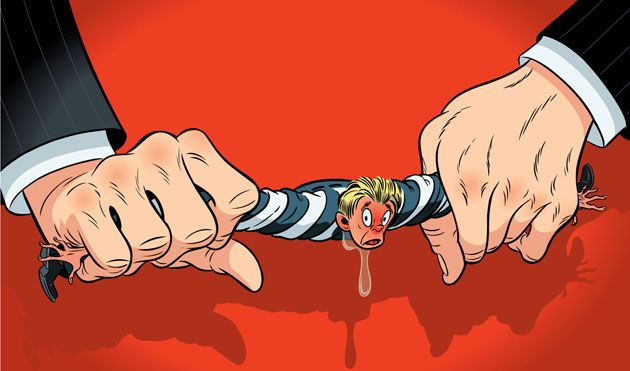
All Work and No Pay: The Great Speedup
(This article is from 2 years ago, but has such ringing prevalence today)
ON A BRIGHT SPRING DAY in a wisteria-bedecked courtyard full of earnest, if half-drunk, conference attendees, we were commiserating with a fellow journalist about all the jobs we knew of that were going unfilled, being absorbed or handled “on the side.” It was tough for all concerned, but necessary—you know, doing more with less.
“Ah,” he said, “the speedup.”
His old-school phrase gave form to something we’d been noticing with increasing apprehension—and it extended far beyond journalism. We’d hear from creative professionals in what seemed to be dream jobs who were crumbling under ever-expanding to-do lists; from bus drivers, hospital technicians, construction workers, doctors, and lawyers who shame-facedly whispered that no matter how hard they tried to keep up with the extra hours and extra tasks, they just couldn’t hold it together. (And don’t even ask about family time.)
Read more here.
ENVIRONMENT
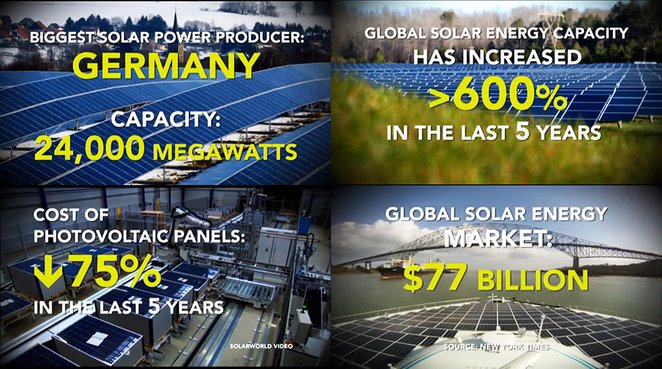
$77 Billion From the Sun: Solar Industry Facts
Bloomberg has created this short video full of facts about the solar industry. Each tidbit is interesting on its own, but it’s when you put them all together that you realize how much progress has been made in a short amount of time, yet how early we are in the life of that industry and how much room for growth there’s still left. We’re just in the second inning!
Read more here.
TECHNOLOGY
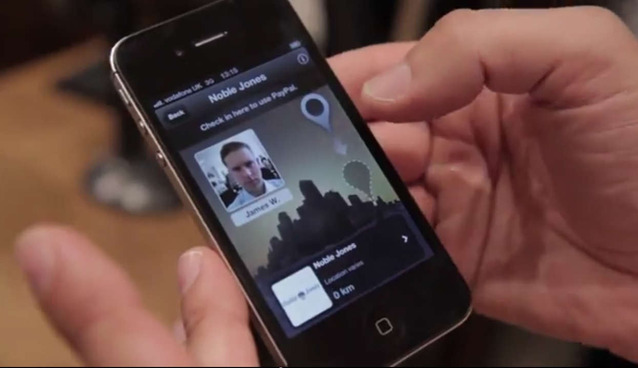
PayPal Testing Face-Verification System for Mobile Payments
While we’re not quite scanning retinas à la Mission Impossible and Minority Report, PayPal is now testing face verification for mobile-payment transactions.
The ecommerce company’s app has a tab labeled “Local,” which helps users find nearby stores and restaurants that accept mobile PayPal payments. Once customers check in to a venue online, their name and photo appear on the store’s PayPal app. Shoppers can then use the app to pay for items (cashiers complete the transaction by clicking on their profile pic).
Read more here.
HEALTH
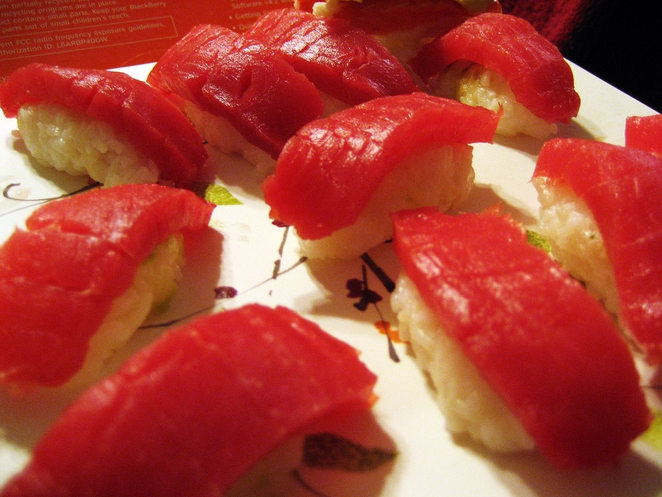
DNA Testing Shows 59% of Fish Sold as ‘Tuna’ in U.S. is Something Else
Oceana is a great NGO focusing on ocean conservation. Over the past few years, they’ve done detective work using DNA testing to figure out if fish sold in grocery stores, restaurants, and sushi venues was properly labeled or if certain species were being passed off as other, more commercially desirable ones. Well, they didn’t do all this work for nothing…
It turns out that out of the 1200 seafood samples Oceana collected from 674 retail outlets in 21 states, 33% were mislabeled. The graph below shows that sushi places are the worst offender, with 3/4 of samples tested not what they claimed to be!
Read more here.

 onedegreecloser